

Table of Contents
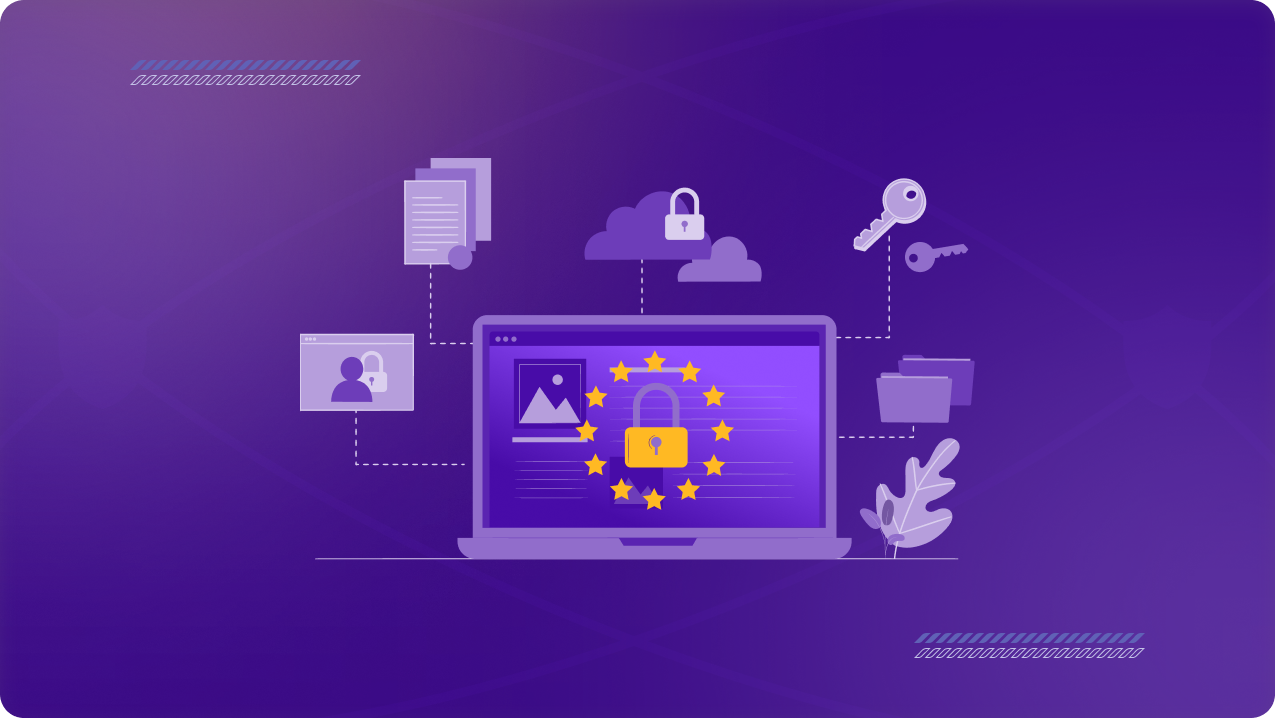
GDPR is one of the most important data protection regulations affecting businesses today. It influences how personal data is collected, accessed, and shared across websites, apps, and internal systems, especially as work becomes more digital and distributed.
If your business handles personal data in any form, GDPR likely applies to you. The regulation impacts how teams manage data access, security, and accountability. In this guide, we’ll break down what GDPR is, who it applies to, and what compliance looks like in practice.
What is GDPR?
GDPR stands for the General Data Protection Regulation, a data protection law that sets rules for how personal data must be collected, processed, stored, and protected. Its core purpose is to give individuals more control over their personal information while holding organisations accountable for how they handle that data.
Rather than dictating specific technologies, GDPR acts as a data protection framework. It defines what counts as personal data, how it can be used lawfully, and what safeguards must be in place to prevent misuse, unauthorized access, or unnecessary exposure. Any organization that processes personal data is expected to follow these principles.
GDPR applies regardless of how data is handled, whether through websites, apps, internal tools, or third-party services. Organizations are expected to follow the same data protection requirements across all of these systems, meaning personal data cannot be treated differently based on where it exists or how it is transferred.
Who does GDPR apply to?
GDPR applies to organizations based on how they process personal data and who that data relates to. The regulation is not limited to a specific industry, company size, or business model. Instead, it focuses on whether an organization determines the purpose of data processing or handles personal data on behalf of another party.
Any organization established in the European Union is subject to GDPR when processing personal data, regardless of where the individuals whose data is being processed are located. At the same time, organizations outside the EU can also fall under GDPR if their activities involve personal data belonging to individuals in the EU.
GDPR applies to both organizations that decide how and why personal data is used and those that process data on their behalf. Therefore, compliance responsibilities extend beyond customer-facing businesses to include service providers, vendors, and partners involved in handling personal data as part of their operations.
What constitutes personal data under GDPR?
Under GDPR, personal data covers multiple types of information. The categories below explain how it is classified:
Direct Identifiers
Direct identifiers are data points that can identify an individual without additional context, such as a person’s name, email address, phone number, or government-issued identification. Since these identifiers directly point to a specific individual, they are always treated as personal data and are subject to GDPR requirements whenever they are collected or processed.
Online Identifiers
GDPR also treats certain technical and digital identifiers as personal data. For instance, IP addresses, cookie identifiers, device IDs, and similar markers can be used to single out or track an individual online. Even if this data does not reveal a person’s name, it can still be linked to an identifiable individual, which brings it within the scope of GDPR.
Employee and Customer Data
Personal data under GDPR is not limited to customers. Information relating to employees, contractors, or job applicants also qualifies as personal data when it identifies an individual. This covers contact details, employment records, and any data processed as part of managing a working relationship, making internal data handling subject to the same regulatory expectations.
Sensitive Personal Data (Special Categories)
GDPR defines certain types of personal data as special categories due to their higher risk if misused. These categories relate to areas like health, biometric identification, racial or ethnic origin, and religious beliefs. Processing this type of data is subject to stricter conditions and safeguards, reflecting the increased potential for harm if it is exposed or mishandled.
7 core principles of GDPR
GDPR is based on a set of core principles that govern how personal data must be handled by organizations:
- Lawfulness, Fairness, and Transparency: Personal data must be processed on a lawful basis and in a way that is fair to the individual. Organizations are required to be transparent about how and why data is collected, used, and shared. Individuals should not be misled or left unaware of how their personal data is being handled.
- Purpose Limitation: Personal data may only be collected for specific, explicit, and legitimate purposes. Once data is collected, it cannot be reused for unrelated activities without a valid legal basis. The purpose limitation principle restricts function creep and ensures data is not repurposed in ways individuals would not reasonably expect.
- Data Minimization: Organizations must limit personal data collection to what is necessary for the stated purpose. Collecting excessive or irrelevant data is not permitted, even if the data could be useful later. Data minimization encourages tighter controls over what data is gathered and retained.
- Accuracy: Personal data must be accurate and kept up to date where necessary. Organizations are expected to take reasonable steps to correct or delete inaccurate data without delay. Accuracy is especially important where decisions or actions are taken based on personal data.
- Storage Limitation: Personal data should not be kept longer than necessary for the purpose it was collected. Organizations must define retention periods and ensure data is deleted or anonymized once it is no longer required. Indefinite storage without justification is not allowed under GDPR.
- Integrity and Confidentiality: Personal data must be protected against unauthorized access, loss, or misuse. Appropriate technical and organizational measures are required to safeguard data throughout its lifecycle. The focus is on preventing breaches and reducing exposure risks.
- Accountability: Organizations are responsible for complying with GDPR and must be able to demonstrate that compliance. This includes documenting decisions, implementing controls, and ensuring policies are followed in practice. Accountability makes GDPR an active obligation, not a passive requirement.
What rights does GDPR give to individuals?
GDPR defines a set of individual rights that organizations must respect when processing personal data:
- Right of access: Individuals can request confirmation of whether an organization is processing their personal data and obtain a copy of that data. Organizations must also explain the purpose of processing, the categories of data involved, and where the data is shared.
- Right to rectification: When personal data is inaccurate or incomplete, individuals can request corrections. Organizations are expected to update incorrect information without undue delay so records and decisions based on that data remain reliable.
- Right to erasure: In certain situations, individuals can request the deletion of their personal data. This applies when data is no longer needed for its original purpose or when there is no lawful basis for continued processing. Erasure requests are assessed against legal and regulatory obligations and are not automatically granted in every case.
- Right to restrict processing: GDPR allows individuals to limit how their personal data is used while specific issues are reviewed. During restriction, data may still be stored but cannot be actively processed until questions around accuracy or legality are resolved.
- Right to data portability: Individuals can receive their personal data in a structured, commonly used format and request that it be transferred to another organization where technically possible. Data portability is designed to reduce lock-in and give individuals more control over where their data resides.
- Right to object: Individuals may object to personal data processing when it is based on certain legal grounds, such as legitimate interests. Once an objection is raised, processing must stop unless the organization can demonstrate compelling reasons to continue.
- Rights related to automated decision-making: GDPR places limits on decisions made solely through automated processing, including profiling. Individuals have the right to safeguards when automated decisions produce legal or similarly significant effects, ensuring meaningful human involvement where required.
Key responsibilities of organizations under GDPR
GDPR places specific obligations on organizations that process personal data. These responsibilities apply throughout the data lifecycle and are used to assess compliance with the regulation:
Process personal data lawfully
Organizations must process personal data on a valid legal basis defined under GDPR. The chosen legal basis must match the purpose of processing and be documented. Processing personal data without a lawful basis is not permitted.
Respect individual rights
Organizations are required to support and respond to individual rights requests, including access, correction, deletion, and objection. Requests must be handled within required timeframes and without unnecessary barriers. Processes must be in place to verify identity and manage requests consistently.
Protect personal data
Appropriate technical and organizational measures must be implemented to safeguard personal data against unauthorized access, loss, or misuse. Protection requirements apply to both digital and physical data and must reflect the sensitivity and volume of data being processed.
Limit data collection and retention
Organizations must only collect personal data that is necessary for a defined purpose and retain it for no longer than required. Retention rules should be documented and enforced to prevent unnecessary storage or reuse of personal data.
Maintain accountability and documentation
Organizations must be able to demonstrate compliance with GDPR. This includes maintaining records of processing activities, documenting decisions related to data protection, and ensuring internal policies are followed in practice. Accountability applies even when data processing is outsourced.
Manage third-party data processing
When personal data is shared with vendors or service providers, organizations remain responsible for ensuring GDPR compliance. Contracts must define data protection responsibilities, and oversight is required to confirm that third parties handle data appropriately.
Report personal data breaches
Organizations must assess and respond to personal data breaches promptly. Where required, breaches must be reported to supervisory authorities and affected individuals within defined time limits. Breach response procedures must be established in advance.
Consequences of a GDPR non-compliance
GDPR sets out specific consequences for organizations that fail to meet their data protection obligations:
Regulatory fines and penalties
Supervisory authorities can impose administrative fines for GDPR violations. Penalties may vary based on factors such as the severity of the infringement, whether obligations were ignored, and whether the organization took appropriate corrective actions. Fines are intended to enforce compliance rather than act as automatic punishment.
Mandatory breach notifications
Organizations may be required to notify supervisory authorities and affected individuals following a personal data breach. Notification obligations depend on the level of risk posed to individuals. Failure to report a breach when required constitutes non-compliance and can result in regulatory action.
Operational disruption
Addressing GDPR non-compliance often requires investigation, remediation, and process changes. Internal resources may be diverted to review data handling practices, secure systems, and coordinate with regulators or legal teams. These efforts can disrupt normal operations and ongoing business activities.
Reputational and trust impact
Non-compliance with GDPR can damage trust with customers, employees, and partners. Loss of confidence in how personal data is handled may lead to long-term reputational harm, even after compliance issues are resolved. Restoring trust typically requires increased transparency and corrective measures.
Legal and contractual exposure
Organizations may face legal claims or contractual consequences as a result of GDPR non-compliance. Agreements with customers, partners, or vendors often include data protection obligations, and violations may trigger liability, penalties, or termination clauses depending on the circumstances.
GDPR compliance checklist for businesses
The following checklist outlines key actions required for GDPR compliance:
- Identify personal data processing activities: Document what personal data is collected, why it is collected, and how it is used across systems and teams.
- Define a lawful basis for processing: Confirm that each processing activity is tied to a valid GDPR legal basis and that the basis aligns with the stated purpose.
- Limit data collection and retention: Collect only data that is necessary and apply defined retention periods to avoid unnecessary storage.
- Apply data protection measures: Use appropriate technical and organizational safeguards to protect personal data from unauthorized access, loss, or misuse.
- Support individual rights requests: Put processes in place to receive, verify, and respond to data subject requests within required timeframes.
- Maintain records and documentation: Keep records of processing activities, data protection decisions, and compliance actions.
- Review third-party data processing: Confirm that vendors and service providers handling personal data are covered by appropriate contracts and safeguards.
- Prepare for personal data breaches: Establish procedures to detect, assess, document, and report personal data breaches when required.
- Train staff on data protection responsibilities: Provide guidance so employees handling personal data understand GDPR obligations and internal policies.
- Regularly review compliance practices: Reassess data handling, controls, and policies to maintain alignment with GDPR requirements.
Frequently asked questions
GDPR is a data protection law that sets rules for how personal data must be collected, used, stored, and protected. It gives individuals more control over their personal information and holds organizations accountable for how that data is handled.
GDPR is enforced by independent supervisory authorities in each EU member state. These authorities investigate complaints, monitor compliance, and issue penalties when violations occur.
Being GDPR compliant means an organization processes personal data lawfully, protects it appropriately, respects individual rights, and can demonstrate compliance with GDPR requirements through documentation and controls.
Yes. Personal data relating to employees, contractors, and job applicants is covered by GDPR. Organizations must apply the same data protection standards to employee data as they do to customer data.
Yes. GDPR treats IP addresses as personal data because they can be linked to an identifiable individual, particularly when combined with other information.
GDPR allows supervisory authorities to impose administrative fines based on the severity of the infringement. Fines can reach up to €20 million or 4% of global annual turnover, whichever is higher.