
Table of Contents
SOC reports are commonly used to provide assurance about how organizations manage systems and controls, but not all SOC reports are designed for the same audience. While SOC 2 reports are frequently requested during security reviews, they are typically restricted documents intended for detailed evaluation by customers, partners, or auditors.
SOC 3 compliance addresses this gap by providing a general-use report based on the same Trust Services Criteria, without exposing detailed control descriptions or test results. In this guide, we’ll explain what SOC 3 compliance is, what it covers, how it is created, and how it differs from SOC 2, so businesses can understand when it is appropriate to use.
What is SOC 3 compliance?
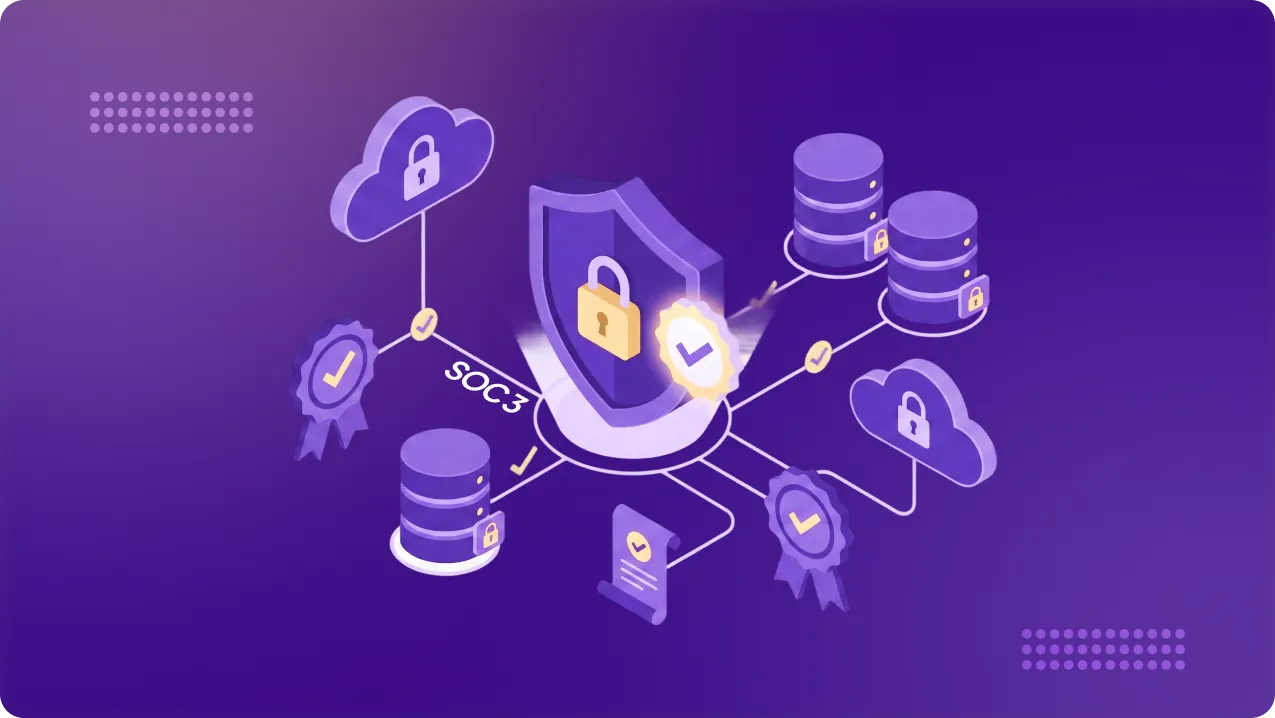
SOC 3 compliance refers to the issuance of a publicly shareable SOC report that summarizes how an organization’s systems align with selected Trust Services Criteria. It is designed to communicate assurance at a high level, without disclosing detailed descriptions of controls or the results of individual control tests.
Like SOC 2, a SOC 3 report is based on an independent examination performed by a certified public accountant, with the key difference lying in how the results are presented. SOC 3 reports provide a concise overview suitable for public use, making them appropriate for audiences that need confirmation of system controls without requiring in-depth technical or audit detail.
- Read Also: What is SOC 1 Compliance?
Why SOC 3 exists
Organizations are often asked to demonstrate assurance about how their systems are managed, especially during early sales conversations, partner discussions, or internal reviews. While SOC 2 reports are well suited for detailed evaluation, their restricted nature can make them impractical to share outside formal due diligence processes.
SOC 3 exists to address this limitation. It allows organizations to communicate the outcome of an independent examination without exposing sensitive control descriptions or testing detail. By presenting assurance in a summarized format, SOC 3 helps organizations provide transparency while maintaining appropriate boundaries around audit information.
As a result, SOC 3 plays a distinct role alongside SOC 2 rather than replacing it. It supports situations where confirmation of controls is needed, but detailed technical or audit-level information is not required, helping organizations respond to assurance requests in a way that is both accurate and appropriate for broader audiences.
How SOC 3 reports are created
A SOC 3 report is based on an independent examination conducted by a certified public accountant. The examination evaluates how an organization’s systems and controls align with the selected Trust Services Criteria, following established attestation standards. This examination forms the foundation for the assurance communicated in the SOC 3 report.
The work underlying a SOC 3 report is typically the same examination activity used to support a SOC 2 report. The difference is not in how controls are assessed, but in how the results are summarized. Rather than including detailed descriptions of controls and testing outcomes, SOC 3 presents the auditor’s conclusions in a condensed format.
Once the examination is complete, the SOC 3 report is issued as a standalone document designed for broader distribution. It reflects the scope and results of the underlying examination while intentionally limiting detail, allowing organizations to share assurance information without disclosing sensitive audit or system-level specifics.
What is included in a SOC 3 report
A SOC 3 report contains several standard components that describe the scope of the examination and the assurance outcome. These include:
- Auditor’s opinion: A SOC 3 report includes the independent auditor’s opinion on whether the organization’s controls align with the selected Trust Services Criteria, which is presented in a standardized format and reflects the auditor’s conclusion based on the completed examination.
- Description of the system in scope: The report provides a high-level description of the systems and services covered by the examination. This section outlines system boundaries and context without going into detailed architecture, configurations, or operational workflows.
- Trust Services Criteria addressed: SOC 3 reports identify which Trust Services Criteria are included in scope like security, availability, processing integrity, confidentiality, or privacy. Only the criteria selected for the examination are referenced, and coverage is limited to those areas.
- Management’s assertion: The report includes a statement from management asserting that the systems and controls described were suitably designed and aligned with the selected Trust Services Criteria. It forms part of the basis for the auditor’s examination and opinion.
SOC 3 vs SOC 2 compliance
| Aspect | SOC 3 | SOC 2 |
| Purpose | High-level assurance summary | Detailed assurance review |
| Audience | Broad or public audience | Restricted audience |
| Shareability | Publicly shareable | Restricted-use only |
| Level of detail | Summary-level | Detailed controls and testing |
| Audit dependency | Derived from SOC 2 | Standalone examination |
| Typical use | Trust pages, early conversations | Due diligence, security reviews |
What SOC 3 compliance does not cover
While SOC 3 reports communicate assurance at a high level, they intentionally exclude certain types of information:
Detailed control descriptions
SOC 3 reports do not include in-depth explanations of how individual controls are designed or implemented. Unlike restricted SOC reports, SOC 3 intentionally avoids documenting control activities, workflows, or procedures at a granular level. This limitation helps prevent the disclosure of sensitive operational detail while still communicating overall assurance.
Control testing methods or results
A SOC 3 compliance report does not present information about how controls were tested, which samples were reviewed, or what specific testing outcomes were observed. The auditor’s conclusions are summarized, but the evidence and testing detail that support those conclusions are not included.
Comprehensive system or architectural detail
SOC 3 does not provide technical system diagrams, configurations, or infrastructure-level descriptions. It is limited to defining scope and context, rather than explaining how systems are built or operated in practice. Details like network architecture or software components are intentionally excluded to avoid disclosing sensitive technical information.
Coverage beyond the defined scope
Only the systems, services, and Trust Services Criteria explicitly included in the report are covered. SOC 3 does not evaluate controls outside the defined scope, even if those controls exist elsewhere within the organization. Activities, systems, or processes not identified in the report should not be assumed to have been reviewed as part of the examination.
Regulatory or legal compliance certification
SOC 3 does not certify adherence to laws, regulations, or industry mandates. The report may support broader compliance or risk management efforts, but it is not a substitute for regulatory assessments or legal compliance audits. Companies may still be required to undergo separate evaluations to demonstrate compliance with specific legal or regulatory requirements.
Ongoing security or risk guarantees
A SOC 3 report does not guarantee security, availability, or risk elimination. It reflects the outcome of an examination over a defined period, not a continuous assessment or assurance that systems will remain secure under all conditions. Changes to systems, controls, or operating environments after the examination period are not reflected in the report.
Benefits of SOC 3 compliance
SOC 3 compliance offers practical benefits related to how assurance information is shared and communicated:
Enables broader sharing of assurance information
SOC 3 compliance allows assurance information to be shared without the restrictions typically associated with detailed SOC reports. Because the report excludes sensitive control descriptions and testing detail, it can be distributed more widely while still communicating the outcome of an independent examination.
Reduces friction in early-stage assurance requests
SOC 3 reports can help address initial assurance questions when stakeholders need confirmation that systems have been independently evaluated. In situations where detailed audit documentation is not required, SOC 3 provides a practical way to respond without initiating a full due diligence process.
Maintains appropriate boundaries around audit detail
By summarizing conclusions rather than exposing underlying evidence, SOC 3 compliance reports help organizations balance transparency with security. This reduces the risk of disclosing operational or technical details that are not necessary for high-level assurance purposes.
Supports consistent external communication
SOC 3 compliance gives businesses a standardized way to communicate assurance outcomes across different audiences. Since the report follows a recognized format, it helps ensure that information shared publicly or externally remains consistent and aligned with the defined scope of the examination.
Complements detailed SOC reporting
SOC 3 works alongside SOC 2 by serving a different purpose. While SOC 2 supports in-depth evaluation under restricted access, SOC 3 extends assurance to broader audiences without duplicating or replacing detailed reporting. That allows organizations to tailor assurance communication based on audience needs.
Who is SOC 3 compliance for
SOC 3 compliance is suitable for organizations in the following situations:
Organizations that need publicly shareable assurance
SOC 3 compliance is well suited for organizations that need to communicate assurance outcomes to a broad audience. This includes situations where stakeholders require confirmation that systems have been independently evaluated, but do not need access to detailed control descriptions or testing evidence.
Businesses responding to high-level assurance inquiries
Organizations may use SOC 3 reports when responding to initial questions from customers, partners, or other external parties. In these cases, SOC 3 can provide assurance without triggering the need to distribute restricted audit documentation or engage in formal due diligence processes.
Organizations with an underlying SOC 2 examination
SOC 3 compliance is appropriate for organizations that have completed a SOC 2 examination and want a summarized report derived from that work. As SOC 3 is based on the same examination activity, it depends on the existence of a SOC 2 engagement rather than functioning as a standalone assessment.
Frequently asked questions
A SOC 3 report is used to communicate high-level assurance about an organization’s systems to a broad audience. It is typically shared in situations where stakeholders need confirmation that an independent examination has been completed, without requiring access to detailed control descriptions or testing evidence.
No. A SOC 3 report is derived from the same examination work performed for a SOC 2 engagement. Without an underlying SOC 2 examination, a SOC 3 report cannot be issued.
The primary difference lies in report detail and distribution. SOC 2 reports provide detailed information about controls and testing and are restricted to specific audiences, while SOC 3 reports present a summarized version of the same assurance outcomes and are intended for broader sharing.
A SOC 3 report is issued based on an examination performed by an independent certified public accountant. The auditor evaluates the organization’s systems against the selected Trust Services Criteria in accordance with professional attestation standards.
SOC 3 reports do not function as standalone Type I or Type II reports. Instead, they reflect whether the underlying SOC 2 examination was a Type I or Type II engagement and summarize the results accordingly.