

Table of Contents
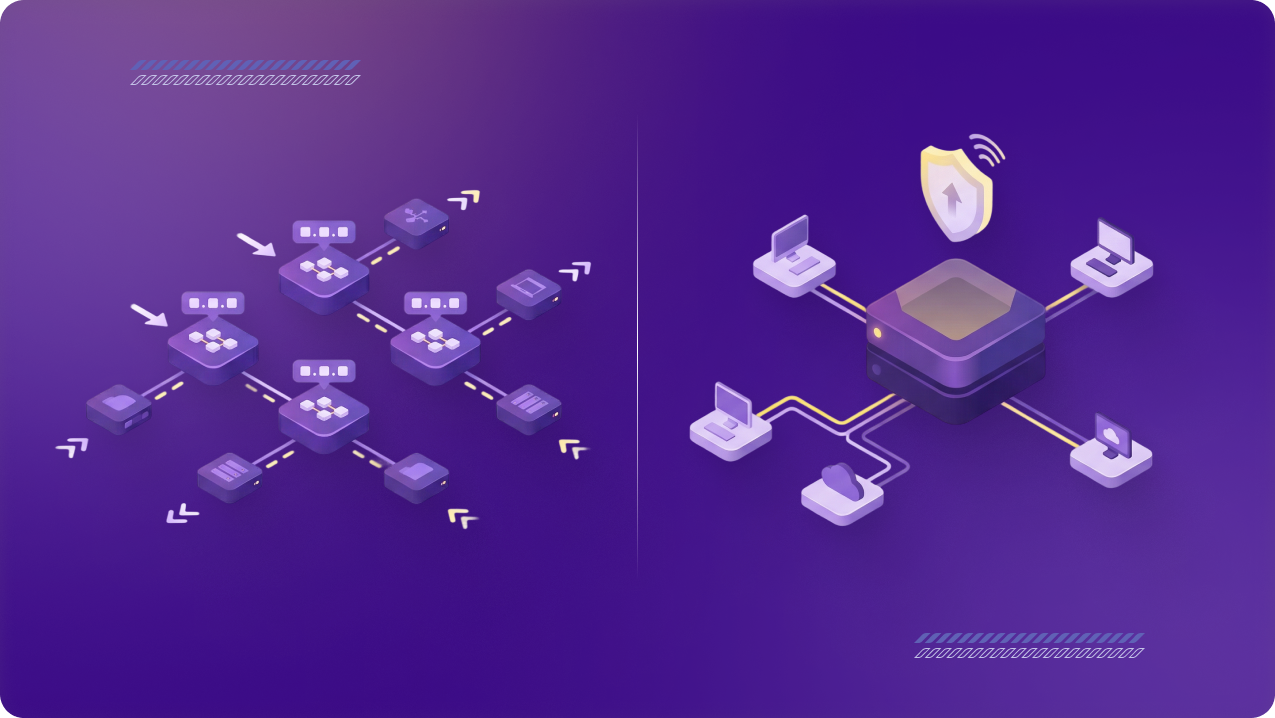
When a team outgrows shared VPN infrastructure, two common options emerge: buy multiple Dedicated IPs, or move to a Dedicated Server. Both approaches offer more control, but they’re not created equal. Let’s break down the differences — and why, for many growing businesses, a Dedicated Server is the smarter long-term move.
Option 1: Multiple Dedicated IPs
How it works
- You purchase separate IPs for different teams, regions, or applications.
- Each group connects through a fixed IP that can be whitelisted by apps.
Pros
- Flexible for small teams or specific use cases (e.g., whitelisting one app).
- Cheaper in the short term than a full server.
Cons
- Management overhead: Tracking who uses which IP becomes complex.
- Inconsistent performance: Still dependent on shared server resources.
- Scaling limits: As teams expand, adding IPs becomes costlier and harder to coordinate.
Option 2: Dedicated Server
How it works
- Your entire team connects through one exclusive server.
- Every user shares the same consistent IP, with resources reserved just for your business.
Pros
- Centralized control: One IP for all seats, easier to whitelist across every app.
- Stability and speed: Performance isn’t affected by other companies.
- Scales with growth: Whether 25 seats or 250, the server scales seamlessly.
Cons
- Higher upfront cost compared to a single Dedicated IP.
- Best suited for mid-to-large teams rather than small startups.
When a Dedicated Server Wins
- 25+ seats: IT teams save hours by centralizing management.
- Compliance-heavy industries: A single IP and unified logs simplify audits.
- Global operations: Dedicated Servers reduce login friction for distributed teams.
Beyond One Server: Multi-Server Setups
As companies expand globally, many eventually move from one Dedicated Server to multiple servers across regions. Benefits include:
- Faster local performance for international teams.
- Redundancy and failover protection.
- Regional compliance (e.g., EU data residency).
Takeaway
Multiple IPs work as a stepping stone, but Dedicated Servers provide the stability, scalability, and simplicity growing businesses need. And as your team scales further, multi-server deployments give you global coverage with enterprise-grade performance.
Ready to go beyond IPs? Explore Dedicated Servers and scale your infrastructure with confidence.